Creative Capital Models & Estate Planning for Private Supportive Housing
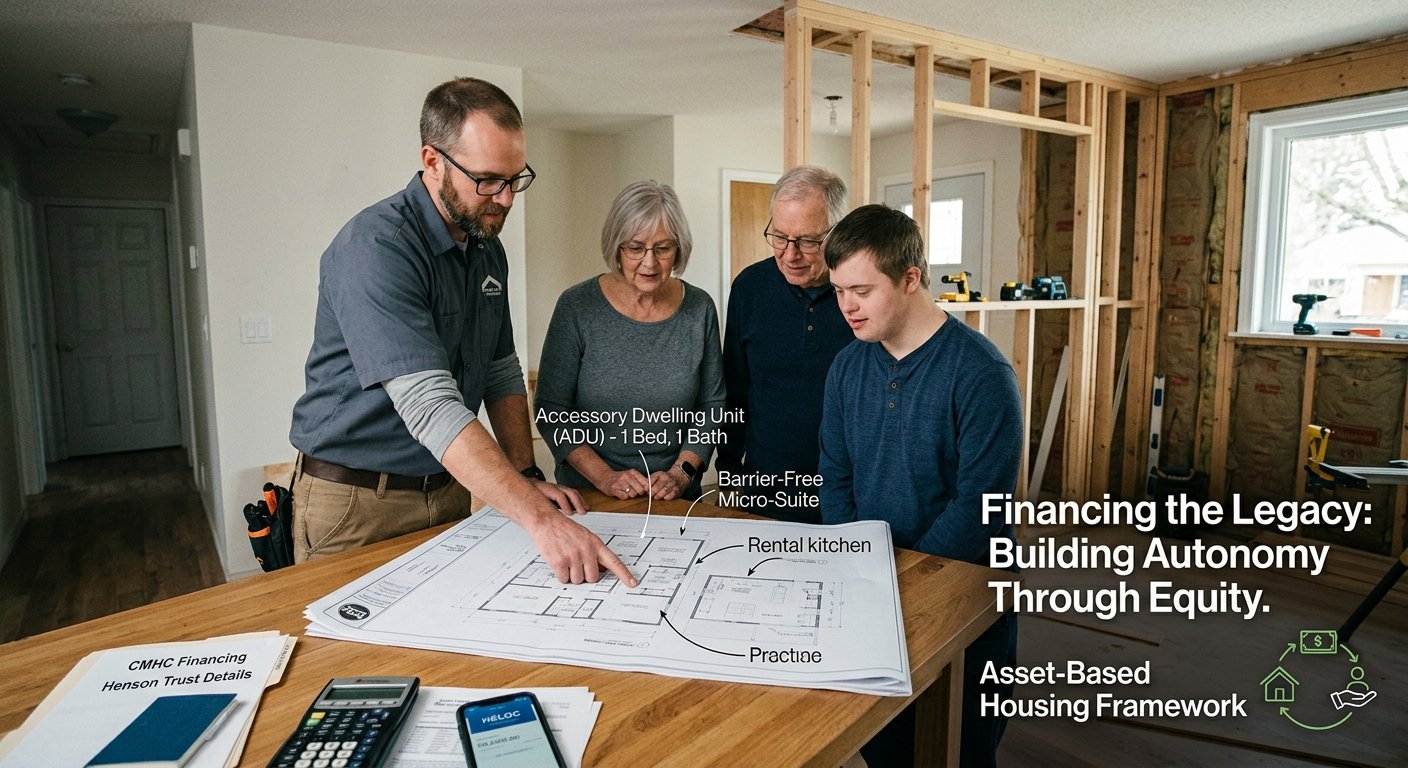
For decades, traditional financial planning for exceptional families focused largely on passive wealth preservation—accumulating savings in Registered Disability Savings Plans (RDSPs) or setting up Henson Trusts. While vital, it’s rare for these tools to generate sufficient liquid capital to cover the soaring monthly operational costs of private, lifelong care.
By shifting from a traditional savings model to an asset-based housing framework, families can leverage their primary residential property to build a self-sustaining financial engine.
The Asset-to-Equity Pivot: Transforming Real Estate into Care Capital
For many families in urban markets like the Greater Toronto Area, their single largest asset is the equity in their primary home. However, that equity is traditionally "locked" until the house is sold—often triggered by a crisis or the death of the parents.
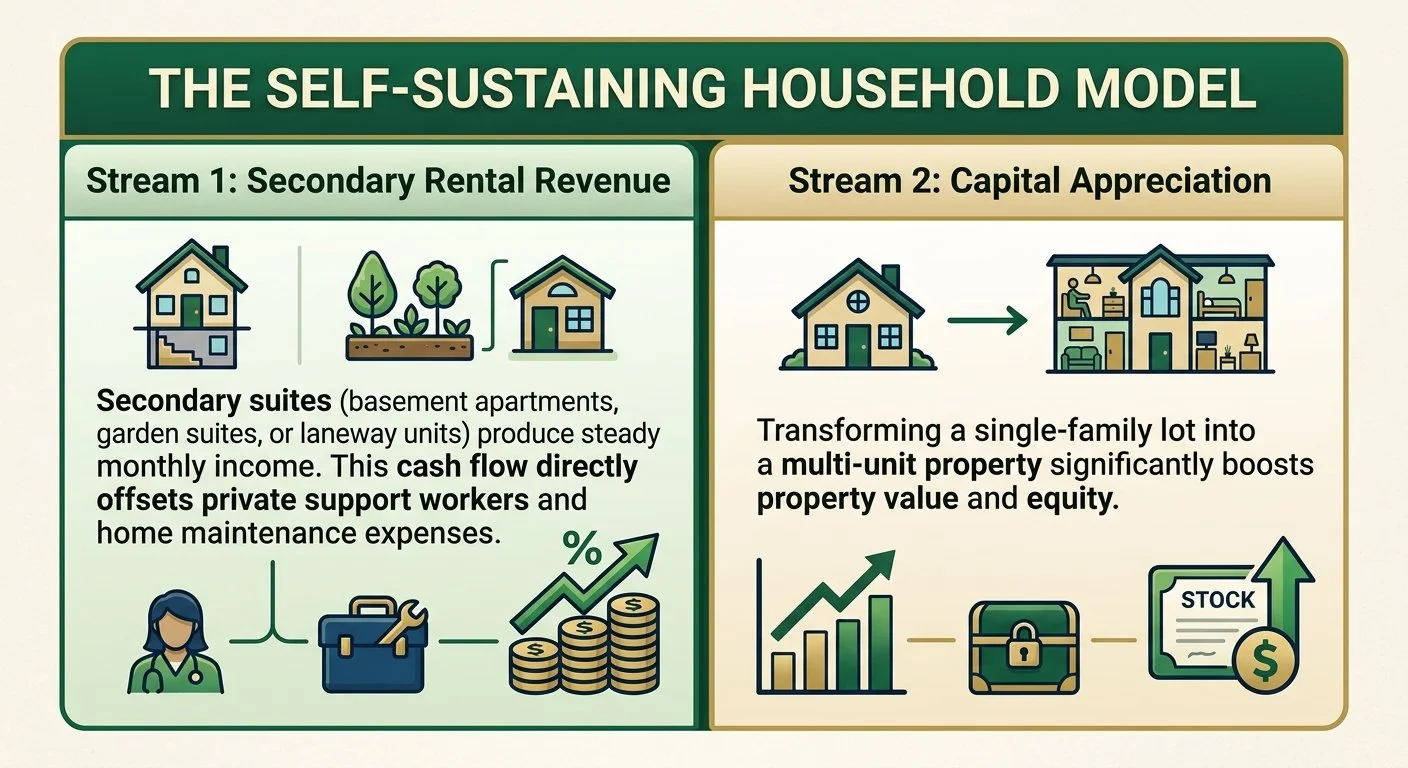
The Legacy model flips this dynamic by mobilizing real estate equity proactively to generate dual-stream financial returns:
Key Financial Mechanisms for Multi-Unit Builds
Navigating the transition from a single-family dwelling to a income-generating, multi-unit supportive environment requires blending several private and public financing strategies:
Refinancing & Construction Financing: Utilizing a Home Equity Line of Credit (HELOC) or cash-out refinance allows families to borrow against their existing property value at residential mortgage rates—providing the initial capital required for soft costs, architectural designs, and ground-up construction.
CMHC MLI Select Program: For larger multi-unit gentle density retrofits (3+ units), families and small-scale developers can access Canada Mortgage and Housing Corporation (CMHC) insured financing. This offers lower interest rates, higher loan-to-value ratios, and longer amortization periods tied to energy efficiency and accessibility commitments.
Optimizing Government Direct Funding: In Ontario, leveraging Passport Program funding alongside the RDSP (with its matching federal grant and bond contributions) helps cover individual community participation, while rental revenue covers the baseline physical building overhead.
Safeguarding the Future: Structuring the Estate
Building the property is only half the battle; ensuring it remains a protected, tax-efficient asset for the adult child requires precise legal and estate structuring:
The Henson Trust Integration: To ensure the adult child does not lose access to provincial disability support benefits (such as ODSP), the property title or the holding entity must be managed through an absolute discretionary trust (a Henson Trust). This ensures the housing asset is protected while allowing rental revenue to flow directly into care services.
Shared Caregiver Suites: By allocating one secondary unit to a live-in support worker or trade student at a reduced rental rate in exchange for nighttime coverage or emergency care, families reduce direct cash outlays for caregiving by up to 50%.
Co-Housing Micro-Cooperatives: Families can form private joint ventures to acquire or redevelop a property together. Two or three families pool capital to build a 4-unit property, creating a built-in peer community for their children while sharing the overhead costs of construction and shared caregiving staff.
By treating residential real estate as an active financial vehicle rather than a static asset, families can replace anxiety about the future with a concrete, self-funding infrastructure of lifelong care and security.